
Microneedling for Acne Scars — Why It Works, and What a Real Course of Treatment Looks Like
For women who have been carrying their acne history on their skin longer than they should have to
For many women, acne scars are the longest-lasting consequence of a chapter they'd rather leave behind. The acne cleared years ago. The scars — the indentations, the discoloration, the texture irregularity — stayed.
Acne scars are among the most responsive conditions for microneedling. But the approach matters enormously, and there's a significant difference between surface-level treatment and genuine tissue repair.
At Aurum Sage in Vancouver, WA, Dr. Chelsea approaches acne scarring the same way she approaches everything: find what's actually driving it, and address it at the root.

What Causes Acne Scars — and Why They Persist
Acne scars form when the inflammatory process of an active breakout damages the collagen structure in the dermis. Depending on how that healing process unfolds, the result can be:
Atrophic scars (depressed, indented) — the most common type, formed when collagen production during healing was insufficient. Includes icepick, boxcar, and rolling scar patterns.
Post-inflammatory hyperpigmentation (PIH) — flat discoloration (pink, red, or brown) that remains after a breakout resolves, caused by excess melanin production in the healing tissue.
Post-inflammatory erythema (PIE) — persistent redness from dilated capillaries in healed tissue.
Most over-the-counter treatments — and many topical prescriptions — work primarily at the surface, affecting pigmentation without addressing the underlying collagen deficit that creates the textural change. This is why results are often incomplete.
How Microneedling Addresses Scarring at the Tissue Level
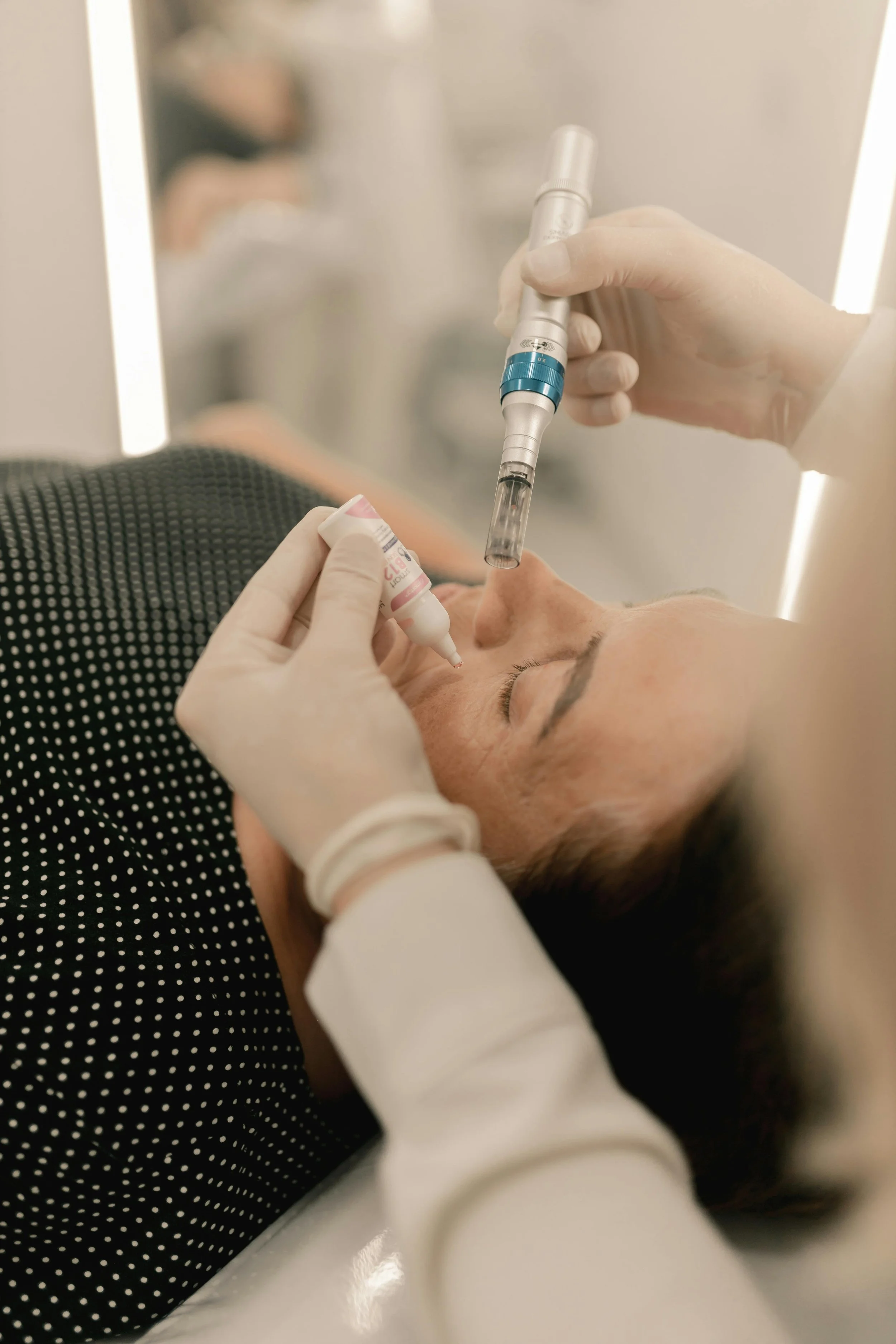
Microneedling's mechanism is particularly well-suited to atrophic acne scarring because it directly addresses the collagen deficit that causes the indentation.
By creating controlled micro-injuries in and around the scar tissue, microneedling triggers a healing response that recruits fibroblasts — the cells responsible for collagen production — to the area. New collagen is laid down in the dermis beneath the scar, gradually filling the indentation from below.
With each session, the scar's depth decreases, the surface texture improves, and the skin's overall quality in the treatment area is enhanced.
For post-inflammatory hyperpigmentation, the accelerated cellular turnover triggered by microneedling helps clear excess melanin deposits more rapidly than natural exfoliation allows. The botanical serums applied during treatment can include brightening compounds that are absorbed at depth — significantly more effective than topical application alone.
What a Real Course of Treatment Looks Like
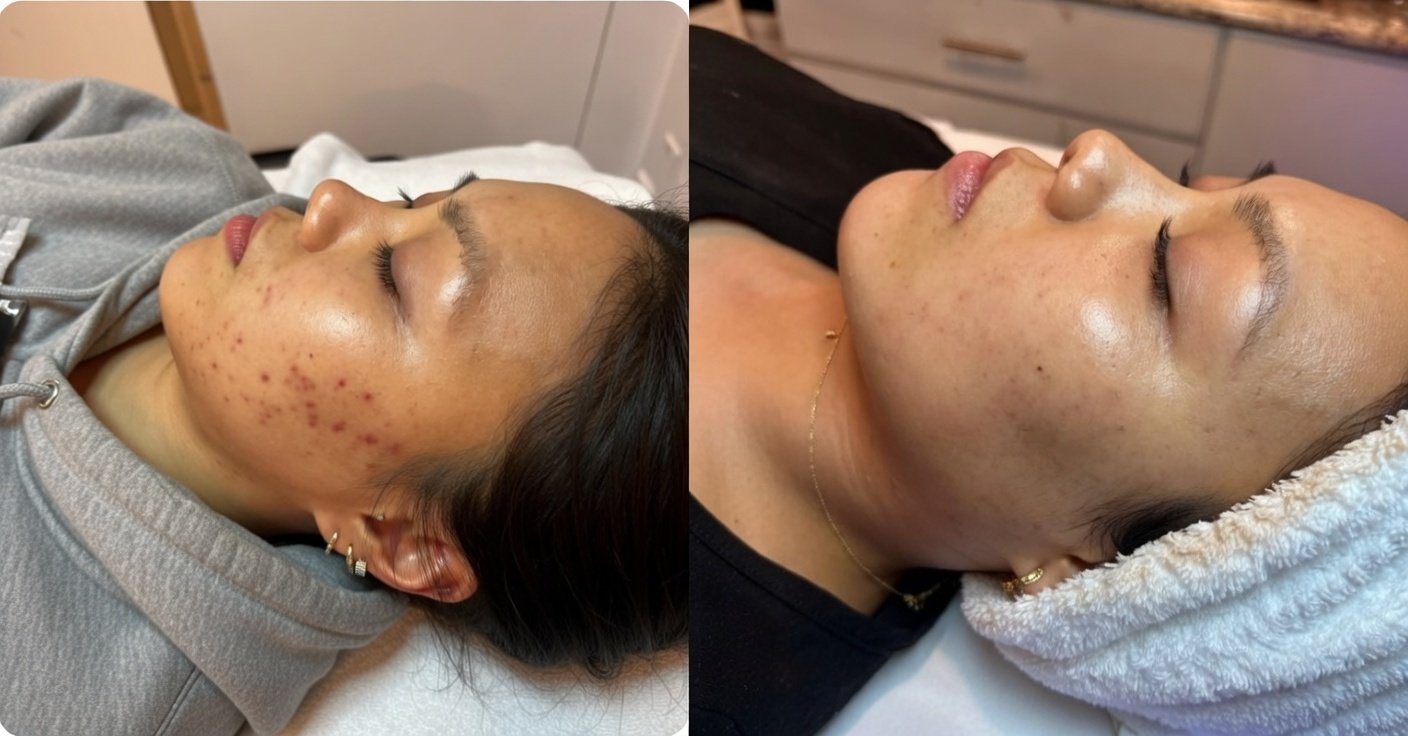
Acne scarring typically requires a longer course of treatment than general anti-aging goals. Here's what to expect:
Sessions one to three: The skin is being primed. Cellular turnover accelerates. Pigmentation begins to fade. Some textural improvement is visible but the most significant changes are happening beneath the surface.
Sessions four to six: Collagen remodeling becomes visible. Indented scars become shallower. Texture normalizes. Tone evens.
Months following final session: Collagen remodeling continues for up to six months after treatment ends. Many patients find their results continue to improve well beyond their final appointment.
Spacing between sessions: four weeks minimum to allow full healing and collagen development between treatments.
Dr. Chelsea will assess your specific scar pattern and give you a realistic recommendation at your first visit — including honest expectations for what degree of improvement is achievable.

The Botanical Difference
The serums used at Aurum Sage during microneedling are botanical — free from synthetic fragrances, parabens, and harsh actives that can irritate healing skin.
This matters particularly for acne-prone skin, which often has a compromised barrier function and heightened sensitivity to inflammatory ingredients. Our formulations support the healing process without adding inflammatory burden — which is especially important when the goal is repairing the damage that inflammation caused in the first place.

Ready to Experience It for Yourself?
Acne scars are not permanent. They are scar tissue — and scar tissue responds to the right stimulus.
Microneedling at Aurum Sage in Vancouver, WA offers a genuine path to meaningful improvement — not overnight, but real and lasting.
Dr. Chelsea has been performing microneedling for six years. New patients are welcome.